Evaluating the Snowy Pines Thank You Card SVG for Handmade Holiday Greetings
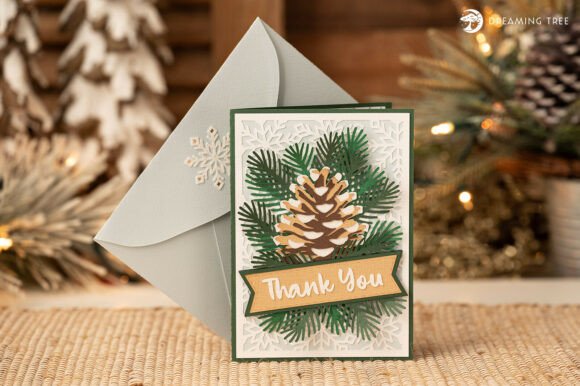
Creating personalized holiday correspondence requires a balance of aesthetic appeal and technical feasibility. For crafters who utilize digital cutting machines, the Snowy Pines Thank You Card SVG represents a specific niche within the broader category of layered paper crafts. This design features a dimensional pinecone and evergreen motif set against a winter-inspired background, offering a rustic yet refined look suitable for seasonal notes. Understanding whether this particular file aligns with your crafting workflow involves examining its structural complexity, material requirements, and compatibility with standard equipment.
Unlike flat, single-layer printables, this SVG is engineered for depth. The design relies on multiple overlapping elements to create a three-dimensional effect, which distinguishes it from simpler cut files. When evaluating such resources, it is essential to consider not just the visual outcome but the assembly process and the specific supplies needed to achieve the intended result.
Design Structure and Dimensional Complexity
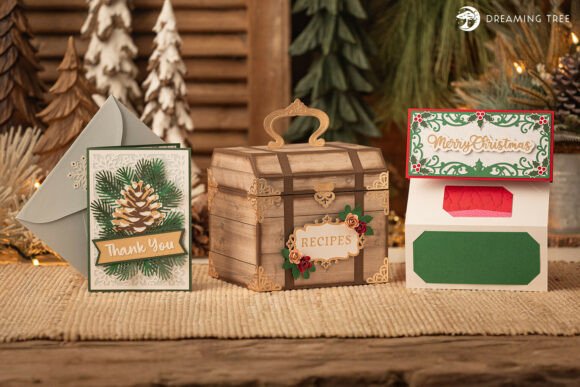
The core appeal of the Snowy Pines Thank You Card SVG lies in its layered architecture. The final product measures approximately 7 inches in height by 5 inches in width, a standard size for handheld greeting cards. However, achieving the advertised "dimensional" look requires more than just cutting paper. The design incorporates a pinecone and evergreen branches that are intended to pop off the base layer, creating shadow and texture.
This approach contrasts sharply with traditional card-making methods where embellishments are often purchased pre-made or stamped directly onto the surface. With this SVG, every element is cut from cardstock or specialty paper. This offers greater customization regarding color palettes but demands higher precision during assembly. Crafters must be comfortable with techniques such as weeding small details and adhering multiple layers without visible glue marks.
A significant advantage of this format is the inclusion of a PDF legend. For complex layered designs, identifying which piece corresponds to which layer can be challenging. A clear legend helps users map out their paper choices before making a single cut, reducing waste and frustration. This organizational aid is particularly valuable for those new to multi-layer SVG projects, as it bridges the gap between digital design and physical assembly.
Material Requirements and Cost Considerations
One of the most critical factors in deciding whether to use this design is the material list. The Snowy Pines Thank You Card SVG is not a minimal-resource project. To replicate the recommended look, the designer suggests a variety of specific cardstocks and specialty papers:
- Two sheets of 12x12 Glacier Melt Cardstock
- Two sheets of 12x12 Hunter Green Cardstock
- One sheet each of 8.5x11 Alabaster, Forest Green, Desert Sand, and Portabella Cardstock
- One sheet of 8.5x11 Textured Gold Foil
- One sheet of 8.5x11 White Glitter Paper
- One sheet of Epson Premium Printer Paper for printed elements
This extensive list highlights a tradeoff inherent in high-detail SVG designs. While the visual impact is superior to flat cards, the cost per unit increases significantly. Specialty papers like gold foil and glitter require careful handling and may not be readily available in every crafter’s stash. Additionally, the need for foam squares to create elevation adds another material cost and step to the process.
For hobbyists who already maintain a well-stocked paper inventory, this may not be a barrier. However, for those looking for a quick, low-cost solution for bulk holiday cards, this design may prove inefficient. It is better suited for special, individualized notes rather than mass production. Comparing this to simpler, two-layer SVGs reveals a clear distinction: the Snowy Pines design prioritizes artistic expression over economy.
Compatibility and Technical Specifications
Technical compatibility is another decisive factor. This file is provided in SVG format only, which is the industry standard for vector-based cutting machines. It is designed with 12x12 cutting machines in mind, ensuring that the larger base layers fit without requiring tiling or拼接 (piecing together). Users with smaller 6x6 machines would need to resize the project significantly, which could compromise the integrity of fine details like the pinecone scales.
The design is fully compatible with major cutting software platforms, allowing users to manipulate colors and layers digitally before cutting. This flexibility is a strength, as it enables crafters to adapt the color scheme to match their personal brand or recipient preferences. For instance, swapping the Hunter Green for a deep navy or the Gold Foil for copper can drastically change the mood of the card while maintaining the structural design.
It is important to note that resizing may alter final dimensions. While the original is 7x5 inches, scaling down for smaller envelopes might make the intricate layers difficult to assemble. Conversely, scaling up could reveal pixelation if any raster elements are included, though pure SVGs should remain crisp. Users should always perform a test cut on scrap paper when adjusting sizes to ensure the weeding process remains manageable.
Assembly Process and Learning Curve
The inclusion of a step-by-step video tutorial is a vital resource for this product. Layered cards can be intimidating due to the sheer number of pieces. The tutorial likely demonstrates the order of operations, such as when to apply foam squares versus liquid glue, and how to align the pinecone layers for maximum dimensionality.
For beginners, this support system reduces the risk of error. However, the time investment remains substantial. Assembling a single card with this level of detail can take thirty minutes to an hour, depending on experience. This contrasts with die-cutting systems where a single pass creates multiple layers instantly, or with stamping where images are applied directly. The SVG route offers unlimited design variations without purchasing new physical dies, but it demands more manual labor.
Crafters should also consider the "Print then Cut" requirement for certain elements. This feature allows for detailed textures or text that cannot be easily cut from solid cardstock. It requires a printer capable of handling the specific paper weight and type, adding another layer of technical dependency. If a user’s printer struggles with thicker cardstock or foil-compatible papers, they may need to adjust their material choices, potentially altering the final aesthetic.
When to Choose This Design Versus Alternatives
Deciding whether the Snowy Pines Thank You Card SVG is the right choice depends on your specific goals and constraints. This design is ideal when:
- Uniqueness is paramount: You want a card that stands out from store-bought options and showcases advanced crafting skills.
- You have existing supplies: You already possess the necessary specialty papers and tools, minimizing additional costs.
- Time is not a constraint: You are creating a small batch of high-value notes for close friends, family, or clients.
- You enjoy the process: You find satisfaction in the meticulous assembly of layered paper art.
Conversely, you might consider alternative options if:
- You need volume: If you are sending fifty or more cards, the assembly time and material cost become prohibitive.
- You prefer simplicity: If you are new to cutting machines, a single-layer or two-layer design may provide a more accessible entry point.
- Budget is tight: Simpler designs require fewer specialty papers and no foam mounting supplies.
- Equipment limitations exist: If you lack a reliable printer for "Print then Cut" functions or a large-format cutter, adapting this design may be challenging.
In the broader landscape of digital crafting resources, layered SVGs occupy a premium segment. They offer a high degree of customization and professional finish but require a corresponding investment in time and materials. The Snowy Pines design exemplifies this category with its rustic elegance and structural depth. By carefully weighing the material requirements against your available resources and the intended purpose of the cards, you can determine if this intricate project aligns with your creative objectives. For those willing to invest the effort, the result is a tangible, heartfelt gesture that transcends typical holiday greetings.